Back to Articles
Planning
Wedding Officiants in Canada: How to Choose One, What They Cost, and the Legal Bits
November 13, 2026
Civil, religious and celebrant officiants compared, what each costs in Canada, the licence and witness rules that trip couples up, and the questions that reveal a good officiant from a warm voice.
<h2>Who actually performs your ceremony in Canada</h2>
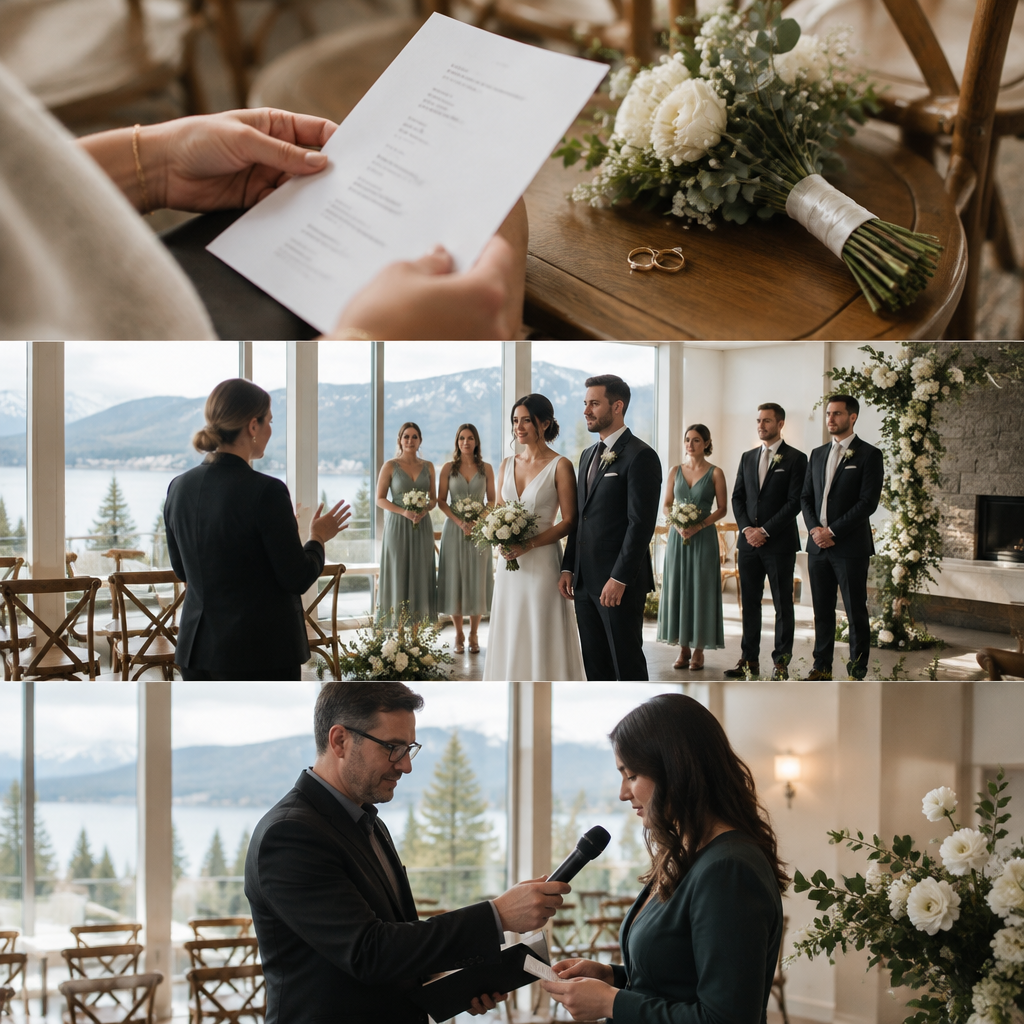
<p>Most couples spend months choosing a venue and a photographer, then book an officiant in a single phone call two months before the wedding. It is the one vendor with a legal job to do, and the one whose voice sets the tone of the whole ceremony. Getting it right is less about romance than about paperwork, and the paperwork is not optional.</p>
<p>In Canada, marriage is administered provincially. That means the rules, the licence, the waiting periods and who is legally allowed to sign change at every border. A friend who got married in Alberta cannot simply repeat the trick for you in Ontario, and a celebrant who was perfect for a beach ceremony in Tofino may not be registered where you are saying your vows.</p>
<h2>The three kinds of officiant, and what each really costs</h2>
<p><strong>Civil officiants</strong> are the workhorses. In Ontario they are registered through the municipality, in other provinces through the vital statistics office or a court system. They handle the licence, the legal declarations, the register and the filing. Fees in major Canadian cities typically land between $250 and $600 for a standard ceremony, with travel extra. They are usually pragmatic and time-efficient, and many will happily perform a short, secular ceremony with no mention of religion at all.</p>
<p><strong>Religious officiants</strong> come through a faith community and often include pre-marriage counselling, which some couples value and others find surplus. Costs vary wildly: a donation to the parish in one case, a fixed fee in another. If you are marrying outside the faith tradition you grew up in, ask early whether the officiant will perform an interfaith ceremony, because not all will.</p>
<p><strong>Celebrants and humanist officiants</strong> are the fastest-growing category. They are usually not clergy, they write and deliver a personalised ceremony, and they are registered to perform legal marriages in most provinces. Expect $400 to $1,200 depending on experience, custom scripting and rehearsal attendance. This is where you buy storytelling and delivery, not just signatures.</p>
<p>A friend or family member can legally officiate in some provinces, for one day, with a permit. Ontario offers a single-occasion licence; the wait, the fee and the paperwork fall on you. It is a lovely idea that becomes a project, and it is worth doing only if someone genuinely wants that job.</p>
<h2>The legal checklist nobody explains at the tasting</h2>
<p>Every province requires a marriage licence, and the licence has an expiry. In Ontario you apply in person at a municipal office, both of you attend, you bring government photo identification, and the licence is valid for 90 days from the date it is issued. That 90-day clock is the single most common source of panic in Canadian wedding planning: couples collect it in June for a September wedding, or collect it too early and watch it lapse.</p>
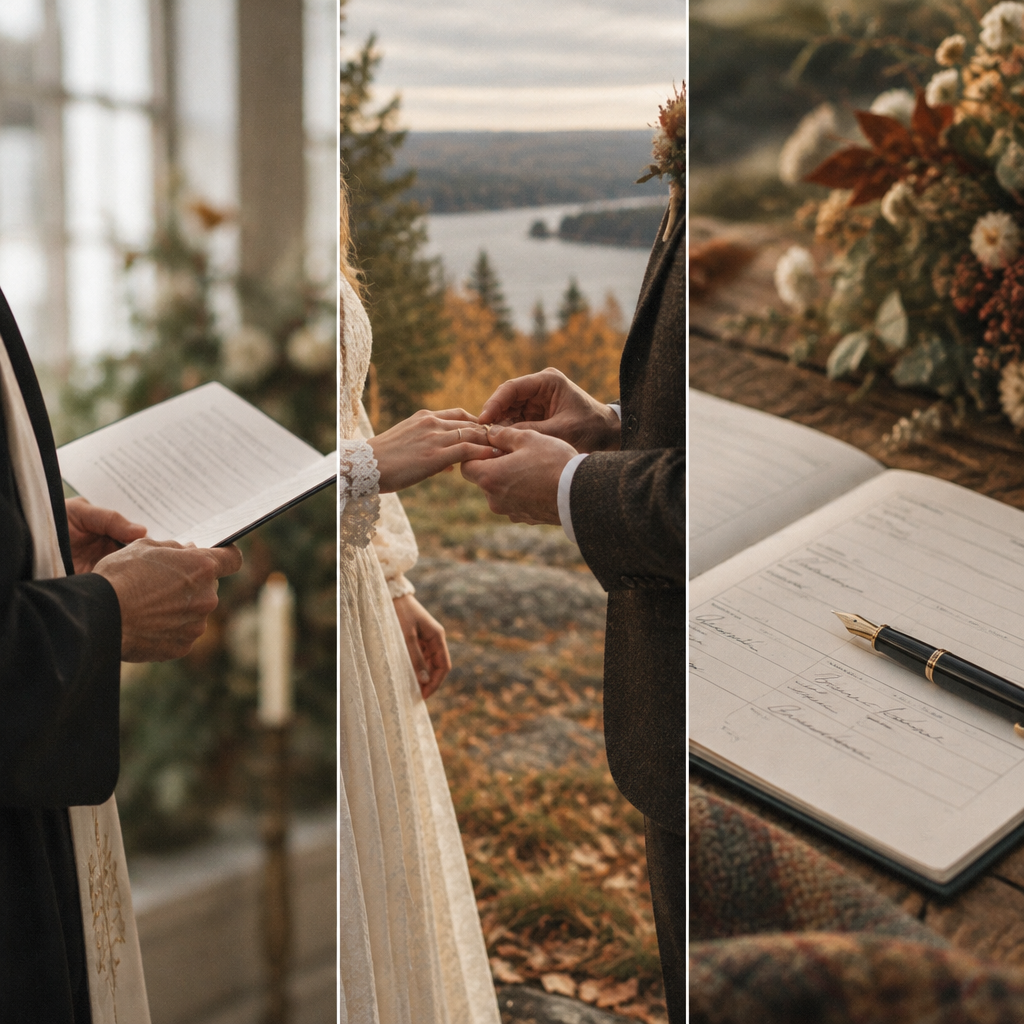
<p>You need two witnesses at the ceremony. They must be present, they must be old enough, and they sign the register. Your officiant needs their registration number on the paperwork in most provinces. If you are changing your name afterwards, the marriage certificate you order should be the long form, and the officiant's filing is what makes it available, so confirm they file promptly rather than at month end.</p>
<p>Divorce paperwork is the other quiet trap. If either of you was previously married, the officiant is legally obliged to see proof the divorce is final before the ceremony, not a pending application. Bring the certificate to the first meeting, not the rehearsal.</p>
<h2>Questions that separate a good officiant from a warm voice</h2>
<p>Ask how many ceremonies they have performed at your specific venue. Ask whether they will attend the rehearsal, and whether that is included or billed separately. Ask who writes the ceremony: a template, a draft you review, or something written fresh. Ask what happens if they are ill on the day, and get the name of the person who covers.</p>
<p>Then ask the question that reveals the most: how long is the ceremony? A seasoned officiant has a rhythm, knows that twenty minutes feels long in the heat and eight minutes feels rushed for a ceremony with readings and a unity ritual. They will also know the venue's noise, wind and microphone situation, which matters more than any script.</p>
<p>Finally, ask what they need from you and by when. A good answer is specific: the licence, witness names, the readings, the pronunciation of every name, and a copy of the vows if you are writing your own. A vague answer means you will be chasing them in the last week, when you should be relaxing.</p>
<h2>Timing and money, in plain numbers</h2>
<p>Book six to nine months ahead for a Saturday in peak season. Book twelve months ahead if you want a specific well-known celebrant, or if your date falls on a long weekend. Off-season and weekday ceremonies can often be arranged in four to six weeks.</p>
<p>Budget realistically: $250 to $600 for a civil officiant, $400 to $1,200 for a celebrant, plus travel outside the city, plus the licence itself, which runs roughly $100 to $150 depending on the province. Rehearsal attendance is sometimes an extra $75 to $150. None of this is glamorous spending, and all of it is what makes the marriage legal rather than merely photographed.</p>
<h2>The part couples forget</h2>
<p>Your officiant is the only person in the room who has to be right. The dress can be adjusted, the flowers can be moved, the band can change the song, but a ceremony that skips a required declaration or an unregistered officiant who cannot file is a problem measured in months, not minutes. Spend one evening reading your province's requirements, one meeting asking the officiant the questions above, and then stop worrying about it. The rest of the day is yours.</p>
<p><strong>One practical note before you book:</strong> Michael Francis Zeiss Photography & Cinematography (<a href="https://www.michaelzeiss.ca">www.michaelzeiss.ca</a>) is running a 50% winter special for weddings taking place in 2026, 2027, 2028 or 2029. The offer expires December 31, 2027. If photography and film are on your must-have list, half price is worth a conversation before you commit elsewhere.</p>